Taboon Bread Recipe (Palestinian Flatbread Without Pocketing)

Taboon bread is a Palestinian flatbread baked to stay soft, flexible, and flat—without forming a hollow pocket. While it’s often grouped with pita or khubz, taboon behaves differently in the oven and fails for different reasons. This recipe focuses on those differences so the bread comes out tender, not dry, and flat, not ballooned.
This method reflects how taboon is handled at home: soft dough, restrained fermentation, deliberate shaping, and direct heat. When those are in balance, the bread behaves. When they aren’t, it fails in predictable ways.
Quick Method Summary
- Mix a soft, slightly tacky dough using mostly white flour with some whole wheat
- Rest until relaxed and lightly expanded, not aggressively risen
- Divide and rest again so the dough spreads easily without springing back
- Shape flat and de-gas, pressing out air
- Dimple deeply across the surface to control steam
- Bake on a fully heated surface until lightly browned and flexible, not crisp
This is the entire method at a glance. The sections below explain why each step works and how to recognize problems before they ruin the bread.
What Makes Taboon Bread Structurally Different
Taboon bread is defined more by how it bakes than by what goes into it. The dough is softer than pita, handled more gently, and baked against intense surface heat.
Taboon vs Pita: Why One Puffs and the Other Doesn’t
Pita is designed to separate internally. Taboon is not.
Pita dough is elastic and sealed so steam inflates it into two layers. Taboon dough is deliberately interrupted—through shaping and dimpling—so steam escapes instead of lifting the bread apart.
Taboon vs Khubz: Thickness, Heat Contact, and Crumb Behavior
Khubz tends to be thinner and drier. Taboon is slightly thicker, softer, and baked to remain flexible. The difference shows up when the bread is folded, wrapped, or used under food rather than stuffed.
The Traditional Taboon Method (Without the Oven Myth)
The word taboon refers to the oven, not the dough. Traditional taboon ovens use stored heat from stones and embers, baking bread quickly through direct contact rather than circulating air.
How the Taboon Oven Actually Bakes the Bread
Heat rises from below, not around. The dough sets from the bottom up before steam can collect into a pocket. This is why surface contact matters more than oven temperature alone. Without it, the dough dries before it has a chance to set.
What Must Be Replicated at Home (and What Cannot)
A home oven can’t reproduce a clay oven, but it can reproduce direct heat. Stones help, but they are not mandatory. What matters is a fully heated surface and controlled dough behavior.
Ingredient Roles (Not Just a List)

White Flour vs Whole Wheat: Texture, Elasticity, and Flavor Balance
White bread flour provides stretch and flexibility. Whole wheat flour provides flavor, color, and traditional character. Too much whole wheat stiffens the dough and leads to dense bread.
Target ratio: about 70% white flour to 30% whole wheat flour.
Pushing whole wheat higher is the fastest way to make taboon feel heavy, even if everything else is correct.
Hydration Level and Why “Soft Dough” Is Not a Measurement
Taboon dough must be soft enough to spread easily but dry enough to hold shape. Slight tackiness is intentional. Chasing a dry, smooth dough almost guarantees stiffness after baking.
Yeast Quantity and Fermentation Timing for Flatbreads
Yeast is used sparingly. Taboon relies on heat and shaping, not aggressive rise. Too much fermentation leads to puffing and weak internal structure.
Dough Behavior Before Baking
Why Taboon Dough Must Spread, Not Spring Back
If the dough snaps back when pressed, it’s too tight. That tension shows up later as ballooning in the oven. Taboon dough should relax quickly under your hands.
Resting vs Proofing: What Each Stage Controls
Resting relaxes gluten. Proofing builds gas. Taboon needs the first more than the second. If you’ve made pita before, taboon dough should feel looser at the same stage.
Dimpling Is Not Decoration
How Dimpling Controls Steam Expansion
Dimples create weak points where steam escapes. They prevent pressure from building into a single internal pocket.
Why Incorrect Dimpling Creates Accidental Pita Pockets
Shallow or uneven dimpling allows the surface to reseal. The bread may look fine going into the oven and balloon seconds later.
Heat Strategy for a Home Oven
Surface Contact vs Air Heat
Air heat dries. Surface heat sets structure. Taboon depends on the second.
Stone, Steel, or Pan: What Actually Matters
Any surface works if it’s fully heated. Stones reflect tradition, but steel or cast iron can do the same job when preheated properly.
Temperature Range That Prevents Dryness
Moderately high heat is enough if the surface is hot. Extremely high air temperature without contact heat leads to stiffness rather than browning.
Why This Taboon Bread Recipe Works
Controlled Moisture Retention
Hydration is set early and protected through fast baking and stacking after removal, allowing moisture to redistribute instead of escape.
Preventing Internal Separation
Gas production is kept low, air is pressed out during shaping, and dimpling interrupts steam expansion. When gas stays controlled, the bread rises evenly instead of tearing itself open.
Preserving Traditional Texture Without Clay Ovens
The method respects how taboon was baked—soft dough, quick contact heat—even when the tools change.
Why Taboon Bread Fails — and How This Recipe Prevents It
Taboon bread usually fails for mechanical reasons, not ingredient quality.
Dough Hydration Mistakes
Belief: Drier dough is easier → Incorrect
Under-hydrated dough bakes dense and stiff. Soft dough is harder to handle but bakes correctly.
Warning signs: cracking dough, thick crumb
Prevention: slight tackiness from the start
Over-Proofing vs Under-Proofing
Belief: More rise means softer bread → Misunderstood
Under-proofed dough snaps back. Over-proofed dough collapses and bakes dense.
Warning signs: resistance during shaping or fragile dough
Prevention: controlled rise, not full doubling
Heat Shock and Pale Bread
Belief: Home ovens can’t do taboon → Misunderstood
The problem is surface heat, not oven type.
Warning signs: pale, stiff bread
Prevention: fully preheated baking surface
Why Dimpling Prevents Pockets
Belief: Dimples are decorative → Incorrect
Classification: Essential
Without dimpling, steam inflates the bread internally.
Warning signs: ballooning in the oven
Prevention: deep, deliberate dimpling
Visual Warning Signs During Baking
- Rapid ballooning → trapped air
- Early stiffening → low hydration or weak surface heat
- Uneven browning → poor contact with the baking surface
Summary of beliefs
- Soft dough → Essential
- Aggressive proofing → Incorrect
- Stones are mandatory → Optional
- Dimpling controls structure → Essential
- High oven temperature alone guarantees success → Misunderstood
Step-by-Step Taboon Bread Recipe
Mixing the Dough
Combine flours, yeast, and salt. Add most of the water and olive oil, mixing until a cohesive dough forms. Add remaining water gradually only if needed.
Why this matters
Hydration is set here. Dry dough cannot be corrected later.
Observe
Soft, slightly tacky dough that pulls together without cracking.
Decide
If dry, add water by teaspoons. If sticky, stop adding liquid.
Do not change yet
Flour ratio or yeast amount.
Light Kneading
Knead gently until the dough stretches easily and relaxes when set down.
Why this matters
Excessive kneading creates elasticity that leads to spring-back and puffing.
Observe
Smooth surface, dough stretches without tearing.
Decide
If snapping back, stop and move to resting.
Do not change yet
Hydration.
First Rest
Cover and let the dough rest until expanded but not doubled.
Why this matters
Builds flexibility without excess gas.
Observe
About 50–70% increase in size, soft feel.
Decide
If fully doubled, move on immediately.
Do not change yet
Yeast or temperature.
Divide and Bench Rest
Divide into portions and rest again, covered.
Why this matters
Relaxes gluten so shaping doesn’t trap tension.
Observe
Portions relax and spread slightly.
Decide
If resisting later, rest longer.
Do not change yet
Portion size.
Preheat Oven and Baking Surface
Heat oven to a high range and preheat stones, steel, cast iron, or an inverted baking sheet until fully hot.
Why this matters
Surface heat sets structure before steam inflates the bread.
Observe
Radiant heat from the surface.
Decide
If bread later dries before browning, preheat longer.
Do not change yet
Dough.
Shape and De-Gas

Flatten each portion, pressing outward from the center to remove internal air.
Why this matters
Trapped air becomes a pocket.
Observe
Even thickness, no visible bubbles.
Decide
If shrinking, rest longer.
Do not change yet
Oven heat.
Dimple Thoroughly

Press firm, deep dimples across the surface.
Why this matters
This is where most pocketing is prevented.
Observe
Dimples remain visible.
Decide
If dimples disappear, press deeper or rest dough longer.
Do not change yet
Hydration.
Bake (Stone or No-Stone)

With stones: place dough directly on hot stones or a stone-lined skillet.
Without stones: bake directly on hot steel, cast iron, or inverted tray.
Why this matters
Direct contact heat mimics the taboon oven floor.
Observe
Flat rise, mottled browning, no ballooning.
Decide
If pale and stiff, surface wasn’t hot enough.
Do not change yet
Dough formulation.
Flip If Needed
Flip once only if the bottom sets faster than the top.
Why this matters
Balances browning without drying.
Observe
Bread stays flexible.
Decide
If stiff, shorten bake next time.
Do not change yet
Shaping.
Stack and Cover

Stack baked breads and cover with a cloth.
Why this matters
Redistributes moisture and keeps bread soft.
Observe
Bread softens slightly.
Decide
If stiffening, baking time was too long.
Do not change yet
Storage method.
Taboon Bread Recipe Card
Ingredients
- White bread flour
- Whole wheat flour
- Water
- Yeast
- Salt
- Olive oil
Instructions
Follow the step-by-step method above, maintaining soft hydration, restrained fermentation, deep dimpling, and direct surface heat.
Oven Temperature and Timing
Use a high oven with a fully preheated surface. Bake until lightly browned and flexible, not crisp.
Storage and Reheating Notes
See sections below.
How Taboon Bread Is Traditionally Served
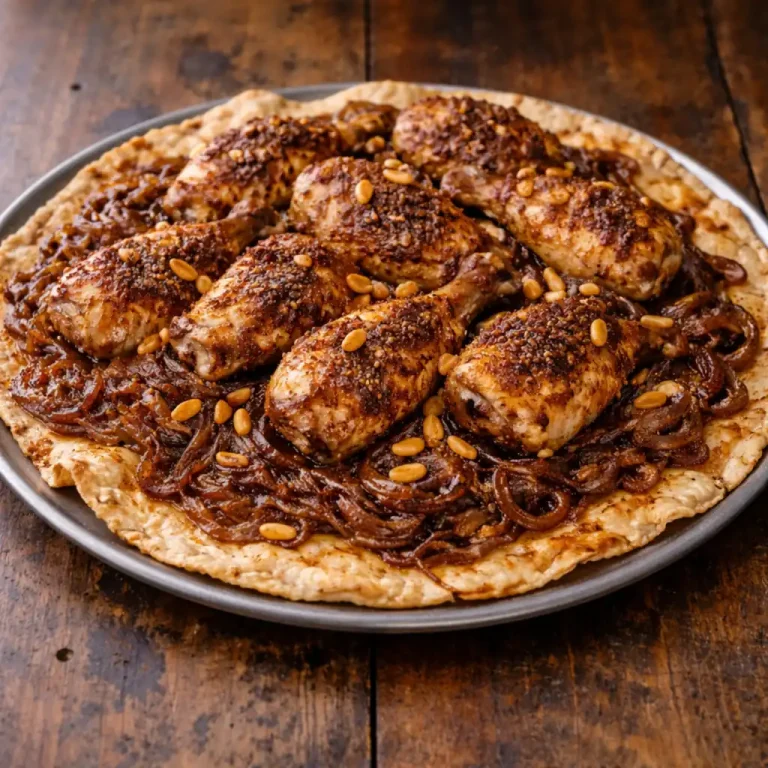
Use in Musakhan
Taboon is used as the base, absorbing onion juices and olive oil without tearing.
Everyday Palestinian Uses
Torn by hand and used to scoop labneh, hummus, or olive oil with za’atar. It is folded or wrapped, not stuffed.
Serving
Taboon is served warm and flexible. It is meant to bend, drape, and soak, not crack.
Storage
- Best eaten the same day.
- Room temperature, wrapped, up to 24 hours.
- Avoid refrigeration.
Freezing
Freezing is acceptable for short storage.
Pros: preserves softness better than aging
Cons: slight aroma loss, sensitive to over-reheating
Freeze airtight for up to 1 month.
Reheating Without Dryness
- Dry skillet: best control
- Wrapped oven reheating: good for batches
- Microwave: only with a damp cloth, short bursts
If taboon stiffens, it is almost always because it was reheated uncovered.
Can Taboon Bread Be Made Without Stones?
Yes. Stones help, but any fully heated surface that provides strong contact heat will work.
Why Doesn’t This Bread Puff Like Pita?
Because air is pressed out, fermentation is restrained, and dimpling interrupts steam expansion.