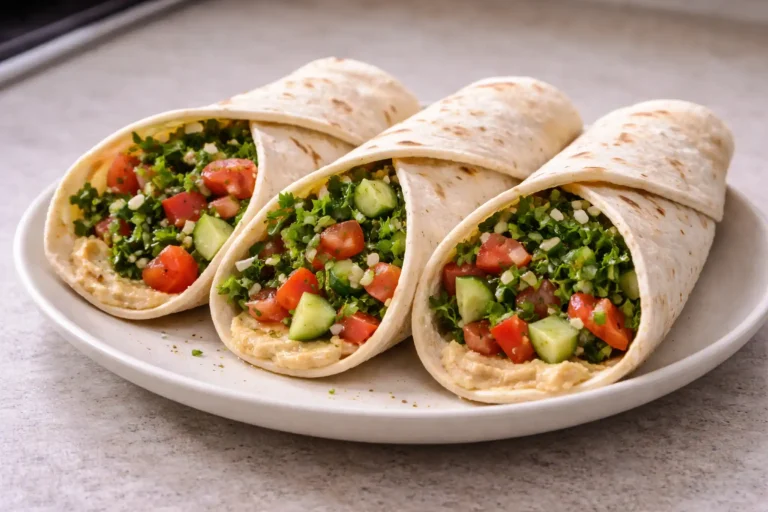
Middle Eastern Stuffed Onions Recipe
Introduction

This easy Middle Eastern stuffed onions recipe, also called onion dolma, is made with soft onion layers filled with seasoned rice. The onions are gently cooked in a light tomato sauce until tender and simple to serve.
Ingredients

Onions
- Yellow onions (medium–large, 7–9 cm / 3–3.5 in diameter)
- Water
- Salt
Filling
- Short- or medium-grain rice (Calrose, Egyptian, or similar)
- Fresh parsley
- Fresh dill or mint
- Tomatoes or tomato paste
- Garlic
- Spices (7-spice/allspice, black pepper, coriander, paprika, etc.)
- Olive oil
- Salt
- Optional ground beef or lamb
Sauce
- Tomato sauce or tomato paste + water
- Lemon juice
- Pomegranate molasses
- Salt
- Butter or olive oil (optional)
Ingredient Notes (Optional)
Best onion type & size:
Choose medium–large yellow onions. Small onions tear easily and won’t hold filling; very large onions produce thick, stubborn layers that cook unevenly.
Rice type & soaking logic:
Short- or medium-grain rice is soaked briefly to begin hydration. This prevents raw centers while still allowing the rice to finish cooking slowly in the sauce without overexpanding or leaking.
Vegetarian base with optional meat:
The recipe is designed to work fully vegetarian. Meat is added in small proportion to enrich flavor, not to replace the rice structure, so both versions cook the same way.
Lemon vs pomegranate molasses balance:
Lemon delivers brightness and clarity; pomegranate molasses adds sweetness and complexity. Used together in moderation, they prevent sourness while keeping the sauce vibrant and balanced.
Quick Method Summary
- Soften the onions in salted water until the layers separate easily
- Carefully separate the onion layers and set aside
- Soak the rice briefly, then mix with herbs, spices, oil, and optional meat
- Fill each onion layer lightly and roll gently
- Place the stuffed onions close together in the pot and add the sauce halfway up
- Cover and cook on low heat until the onions are soft and the rice is cooked
Step-by-Step Cooking Instructions
Step 1: Soften the Onions

What to do:
Trim both ends of the onions, peel, then cut a shallow slit from top to bottom, stopping just before the center. Simmer or microwave in salted water until a knife slides in easily but the onion still holds its shape.
Why this matters:
Under-softened onions tear when separated; overcooked onions collapse. The slit allows layers to release without splitting the onion in half.
Step 2: Cool the Onions
What to do:
Remove onions from the water and let them cool until warm, not hot.
Why this matters:
Hot onion layers are fragile and tear easily. Cooling firms them slightly, giving you control.
Step 3: Separate the Onion Layers
What to do:
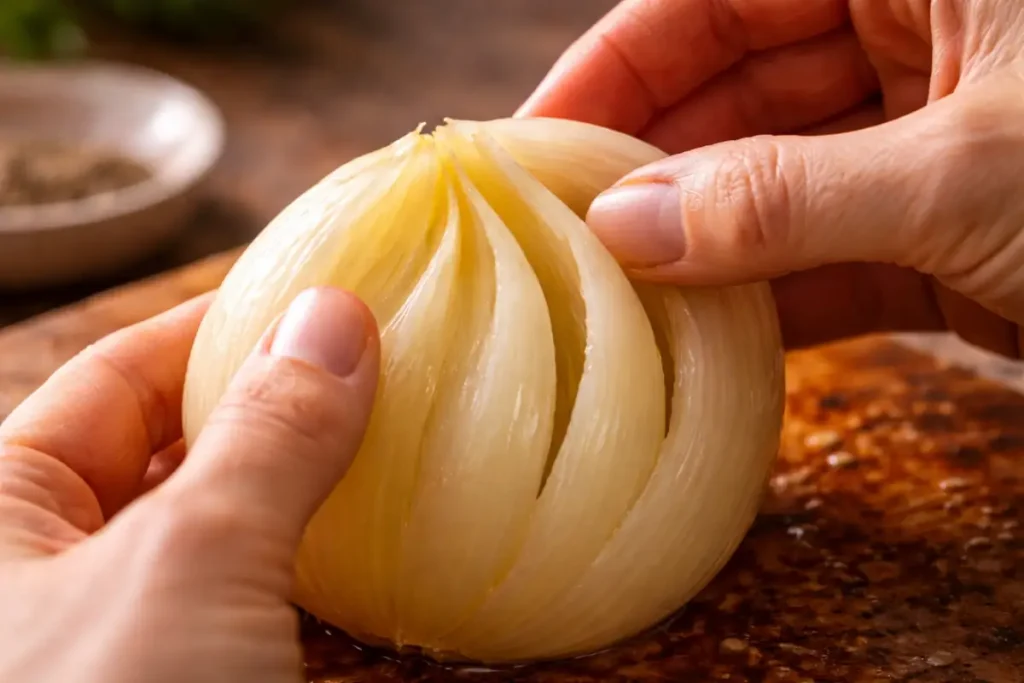
Start from the outer layers and gently loosen each layer along the slit, peeling it open rather than pulling it apart.
Why this matters:
Pulling causes stress tears. Peeling follows the natural onion structure and preserves intact wrappers.
Step 4: Prepare the Rice Filling
What to do:
Soak short- or medium-grain rice briefly, drain well, then mix with herbs, spices, oil, and optional meat until evenly coated.
Why this matters:
Pre-hydrated rice cooks through during simmering without expanding aggressively and breaking the onion layers.
Step 5: Fill the Onion Layers

What to do:
Place a thin line of filling near one edge of each onion layer—never more than one-third of the layer’s width.
Why this matters:
Rice expands as it cooks. Overfilling guarantees burst seams and leaking filling.
Step 6: Roll the Onions

What to do:
Roll the onion layer just until it holds together, then stop—do not compress.
Why this matters:
Compression forces rice outward as it expands, causing splits during cooking.
Step 7: Arrange the Stuffed Onions
What to do:
Arrange stuffed onions tightly in a single layer with seams facing down.
Why this matters:
Tight packing prevents unrolling and helps the onions cook evenly without floating.
Step 8: Add the Sauce

What to do:
Pour sauce down the side of the dish until it reaches about halfway up the onions.
Why this matters:
Too little liquid causes raw rice; too much dilutes flavor and loosens the rolls.
Step 9: Cook the Stuffed Onions
What to do:
Cover tightly and cook at a gentle simmer on the stovetop or in a moderate oven until rice is tender. Avoid rapid boiling.
Why this matters:
High heat causes violent bubbling, which tears onion layers and forces filling out.
Step 10: Rest Before Serving
What to do:
Let the stuffed onions rest, covered, for 10–15 minutes before serving.
Why this matters:
Resting allows the rice to finish absorbing liquid and helps the rolls hold their shape when plated.
Even if the onions aren’t perfectly rolled, they will still cook well and taste good once everything softens together in the pot.
Common Problems and Easy Fixes
Onion Layers Tear
This happens when onions are either under-softened or handled while too hot. Soften them until a knife slides in easily, then let them cool before separating. Always peel layers open slowly along the slit instead of pulling.
Rice Is Undercooked
Raw rice means not enough liquid or too much heat. Use short- or medium-grain rice, soak it briefly, and make sure the sauce reaches halfway up the onions. Cook gently, never at a hard boil.
Filling Leaks Out
Leaking comes from overfilling or rolling too tight. Use a thin line of filling and roll just until it holds. Pack the onions snugly and seam-side down so they can’t unravel.
Sauce Tastes Too Sour
Too much lemon or pomegranate molasses turns the dish harsh. Balance sharp lemon with a small amount of sweetness from pomegranate molasses, and let the sauce cook slowly so the acidity mellows.
Burnt Bottoms
Burning happens when heat is too high or the pan runs dry. Keep the dish covered, use moderate heat, and check once during cooking to confirm there’s still liquid in the pan.
Traditional Middle Eastern cooking relies on gradual rice hydration and gentle, covered simmering to achieve evenly cooked stuffed vegetables. When the rice is properly soaked and the heat is kept low, the onion layers soften without splitting and the filling cooks through at the same pace as the sauce.
Serving, Storage, and Reheating

Serving
Serve stuffed onions warm or just above room temperature, arranged tightly on a platter so they support each other. Spoon a little of the cooking sauce over the top. Traditionally served with plain yogurt or laban, fresh salad, and flatbread. Avoid spreading them out; they hold best when nestled together.
Storage
Let the stuffed onions cool completely before storing in an airtight container with some of the sauce.
Refrigerator: Up to 4–5 days
Freezer: Up to 2 months, fully cooled and covered with sauce
Do not store dry; the rice hardens and onion layers split when reheated.
Reheating
Reheat gently to keep the onions intact.
Stovetop: Low heat, covered, with a few tablespoons of water or sauce.
Oven: Covered tightly with foil at low temperature.
Microwave: Only if necessary; reheat in short intervals with added moisture.
Do not reheat uncovered, use high heat, or flip/stir the onions.
Related Traditional Recipes
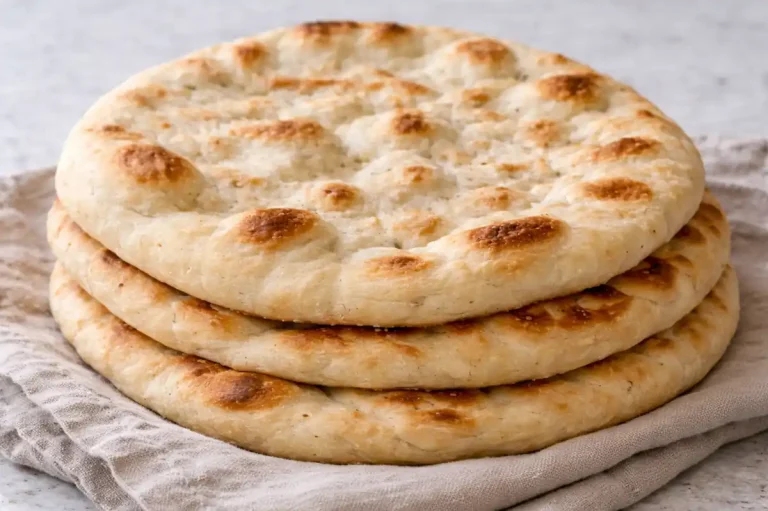
This dish pairs naturally with Palestinian Musakhan, Mujadara (Palestinian), and freshly baked Taboon Bread, which is ideal for scooping up sauce and serving alongside stuffed vegetables.
Can I use small or very large onions?
Small onions tear easily and very large ones cook unevenly, so medium–large onions work best.
Why is my rice still slightly raw?
This means there wasn’t enough liquid or the heat was too high during cooking.
Is oven cooking better than stovetop?
Neither is better, but both require low heat and a tightly covered dish.
How do I reheat without breaking the onions?
Reheat covered on low heat with a little liquid and do not stir or flip.