Palestinian Baklava (Home-Made Style)
Introduction
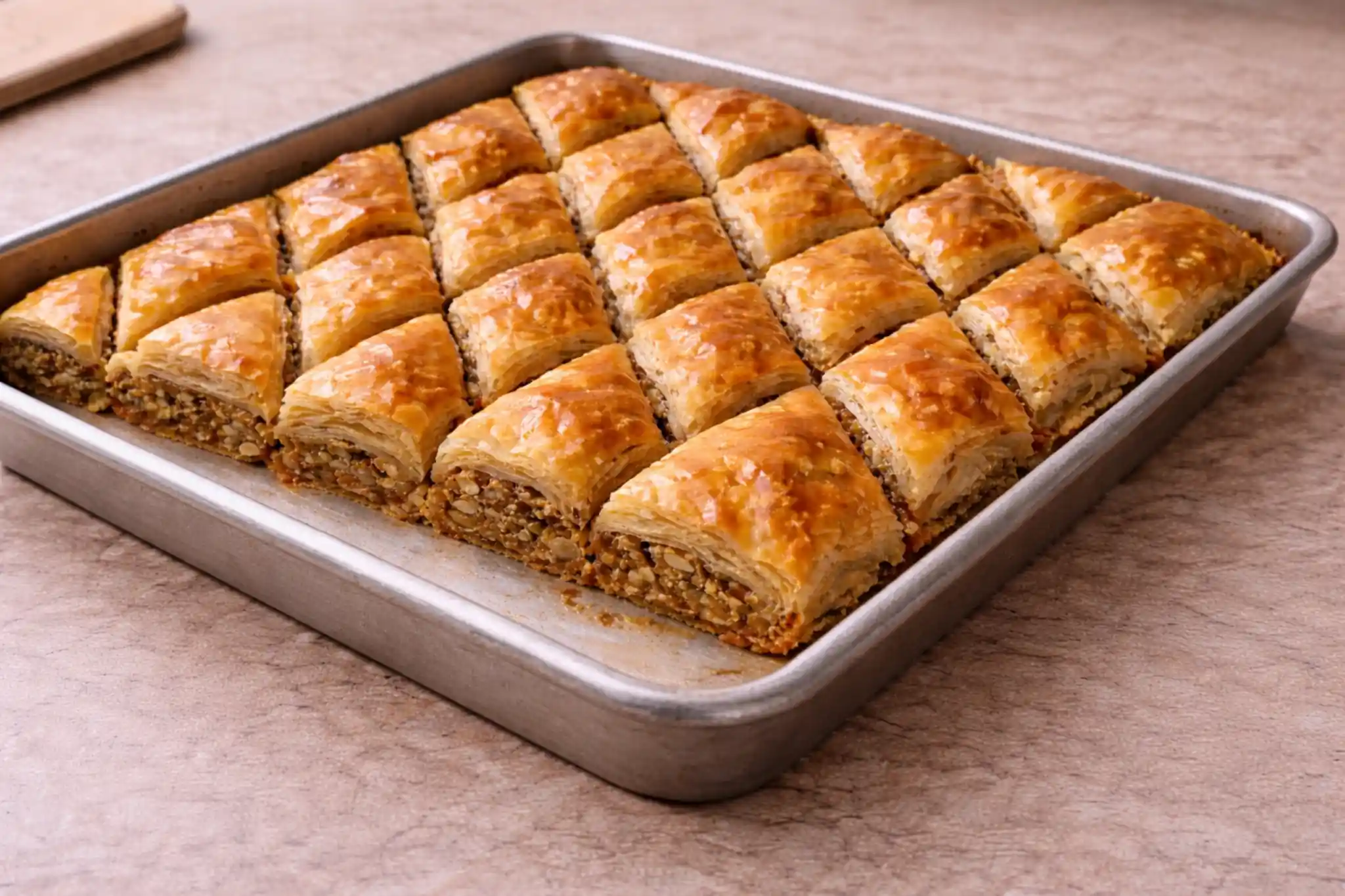
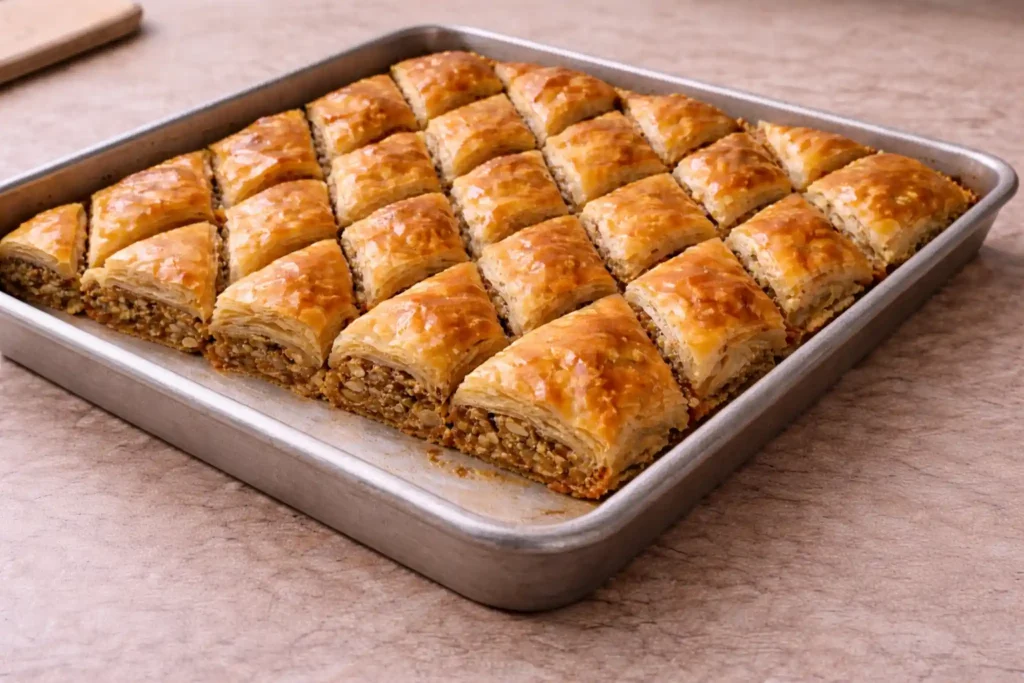
This is the baklava made at home, in a rectangular tray, without fixing every edge or weighing every handful. It’s layered calmly, cut before baking, and soaked while still hot. Some pieces come out uneven. One corner always seems to take more syrup. It settles anyway, slices as it should, and disappears with coffee the way it usually does.
Recipe At a Glance
Prep Time: about 45 minutes
Bake Time: 35–45 minutes
Resting Time: at least 4 hours
Total Time: about 5–6 hours including rest
Servings: one medium tray (24–30 pieces)
Cuisine: Palestinian
Method: oven-baked, layered phyllo dessert
Ingredients
Phyllo & Structure
- Phyllo dough (1 package, thawed)
Thin sheets that bake crisp on top and soften underneath once the syrup settles. Standard flat phyllo is what’s used. A few torn sheets don’t matter once everything’s layered.
Nut Filling
- Finely chopped walnuts, pistachios, or a mix (about 3 cups)
Walnuts bring depth and softness; pistachios add color and a lighter bite. A mix shows up often. The chop stays small but textured so the layers don’t blur together. - Sugar (2–3 tablespoons)
Just enough to round out the nuts. - Ground cinnamon (1 teaspoon)
Warm, quiet, and easy to miss if you weren’t looking for it.
Fat for Layering
- Unsalted butter, melted, or clarified butter/ghee (about 1½ cups)
Brushed between sheets so the layers separate and brown. Butter brings flavor; ghee keeps things cleaner. What matters more is brushing steadily instead of pouring.
Syrup
- Sugar (2 cups)
The sweetness that carries through the tray. - Water (1¼ cups)
Keeps the syrup loose enough to move through the cuts. - Lemon juice (1 tablespoon)
Keeps the syrup clear. - Orange blossom water and/or rose water (about 1 tablespoon total)
This is the scent that shows up once everything rests. It doesn’t need much.
Quick Method Summary
- Make the sugar syrup and set it aside.
- Chop the nuts and mix with sugar and cinnamon.
- Butter the tray and start layering phyllo with butter between.
- Add the nuts, then more phyllo on top.
- Cut all the way through before baking.
- Bake until the tray smells done.
- Pour syrup over while it’s hot.
- Leave it on the counter and come back later.
Step-by-Step Assembly & Baking
Make the syrup.
Bring sugar, water, and lemon juice to a boil, let it simmer briefly, then turn off the heat and stir in the blossom or rose water. Set it on the counter. By the time the baklava is ready, the pot should feel cool to the touch.
Prepare the nuts.
Chop the nuts until they’re small and textured, then mix with sugar and cinnamon. When you pick some up, it should hold together lightly in your fingers.
Ready the tray.
Butter the bottom and corners well. The surface should look evenly coated, especially where the edges meet the sides.
Start the base layers.
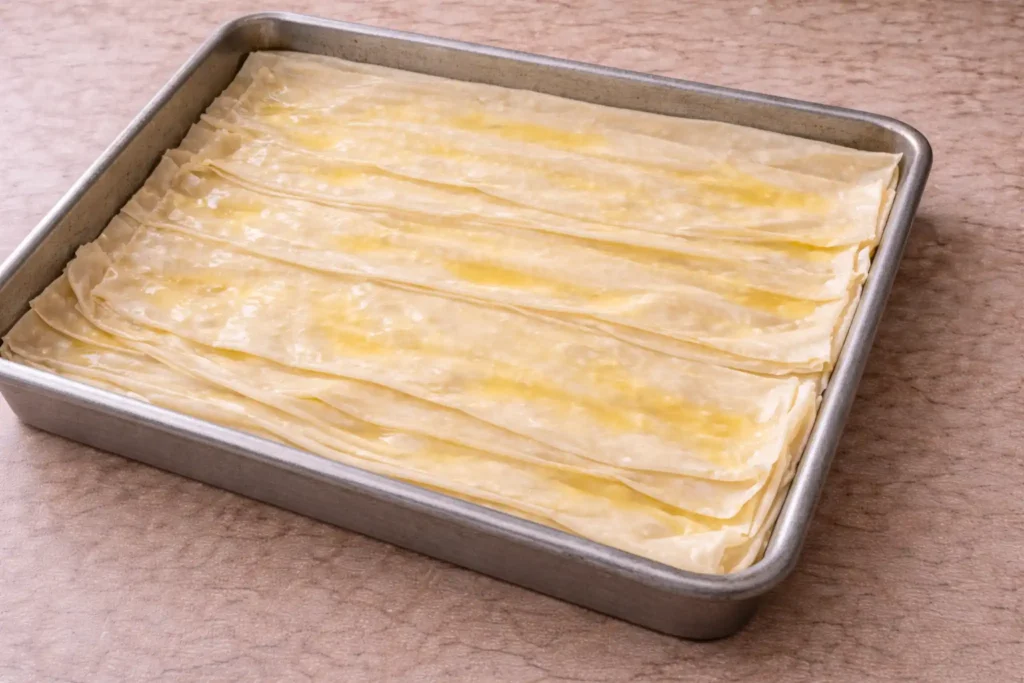
Lay down a sheet of phyllo and brush it with butter. Add another and brush again. The sheets don’t need to behave perfectly. If one tears, the next one covers it.
Keep layering.
Continue until the base feels padded when you press on it. At that point, it usually feels right.
Add the nut layer.
Spread the nuts evenly, stopping short of the edges. They should sit loosely, not pressed down.
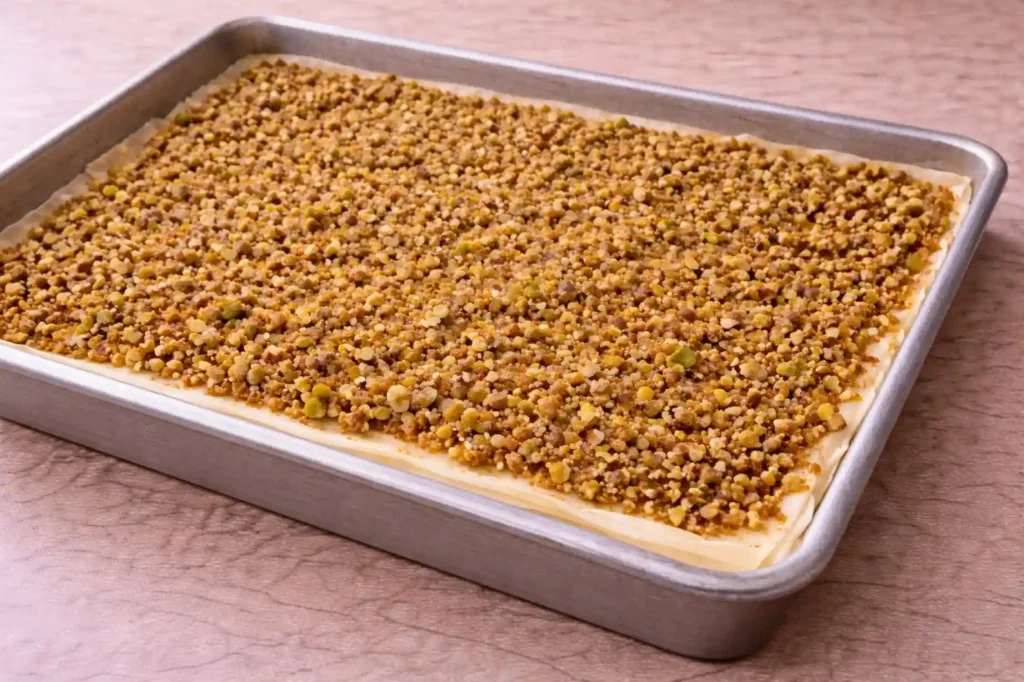
Finish the top layers.
Layer the remaining phyllo, brushing butter between sheets. If there are smoother sheets left, they go near the top. Butter the final layer well.
Cut before baking.
With a sharp knife, cut the tray all the way through. You should feel the knife hit the bottom. If a line feels shallow, go over it again.
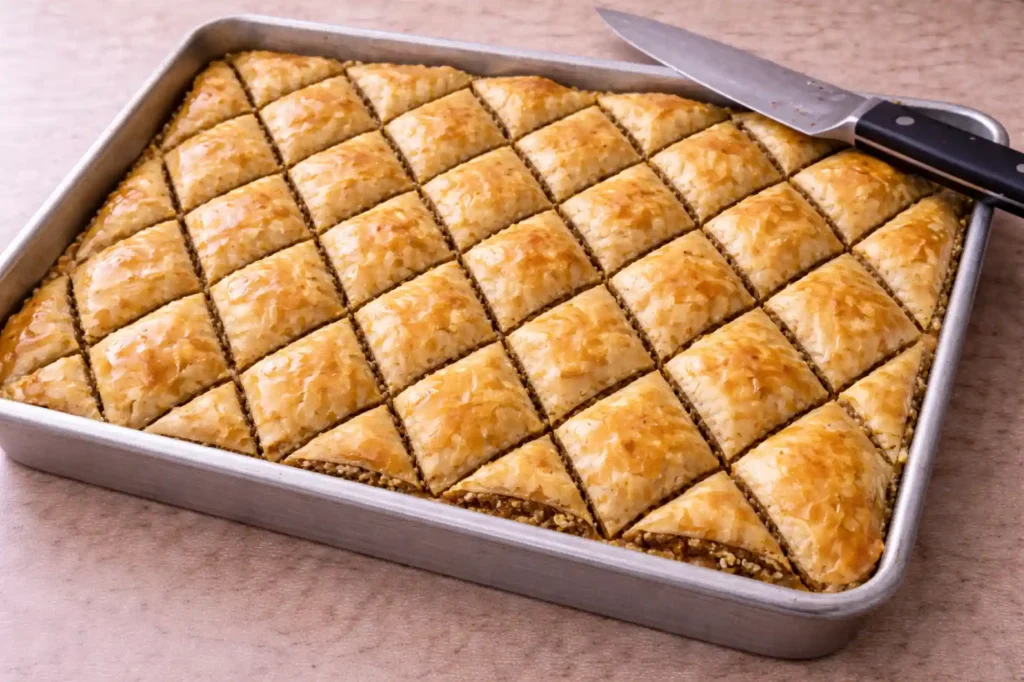
Pour the remaining butter.
Drizzle the rest of the butter across the surface and let it run into the cuts. A slight tilt of the tray helps it move.
Bake.
Bake in a preheated oven at 175°C / 350°F until the top is deeply golden and the edges have darkened a little. The smell fills the kitchen before the timer matters.
Add the syrup.
Take the tray out of the oven and pour the cooled syrup over it, starting near the edges and working inward. It sinks in almost immediately.
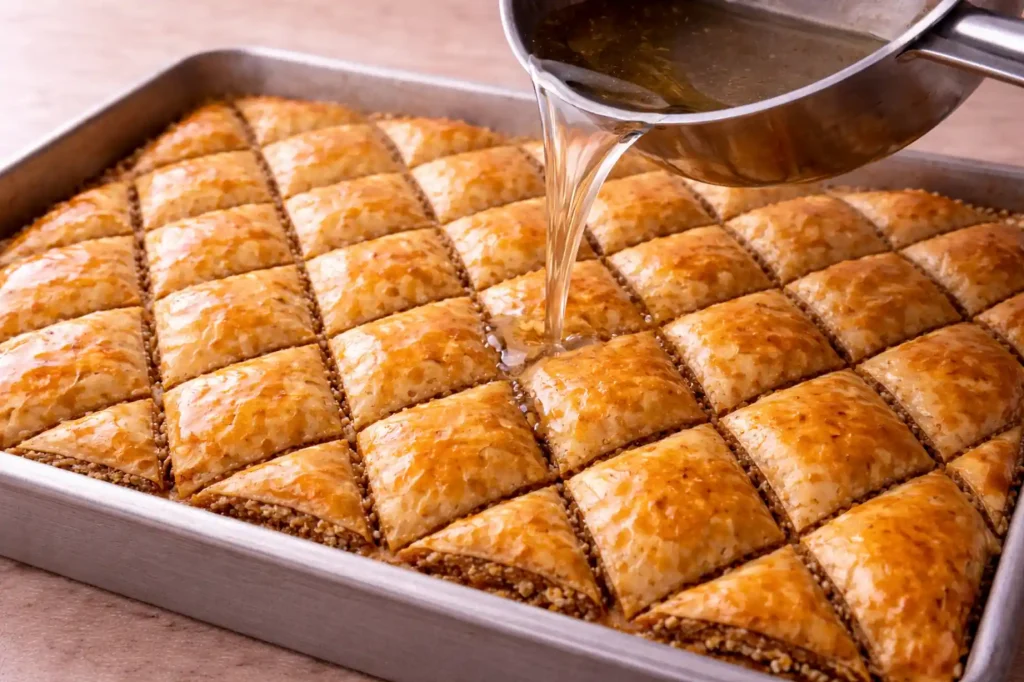
Leave it alone.
Set the tray aside, uncovered. Over the next few hours, the layers soften underneath and the surface settles on its own.
Why This Baklava Fails — and How to Prevent It
It turns soft instead of layered.
This usually happens when the tray takes more syrup than it needs. Pour slowly and stop once it’s absorbed.
The center feels dry while the top looks fine.
That comes from a nut layer that’s too thin or pressed down. Spread it evenly and leave it loose.
The top shatters when lifted.
Cuts didn’t go all the way through before baking. The knife needs to reach the bottom of the tray.
Some pieces brown faster than others.
A few layers missed the butter. Brushing steadily avoids that.
The edges stick or burn.
The corners weren’t buttered well, or the nuts crept too close to the sides. Leaving a small border helps.
The flavor feels heavy.
Too much blossom or rose water tends to show up later. Measuring lightly is enough.
These are the kinds of things you notice after the tray is already half gone.
Serving
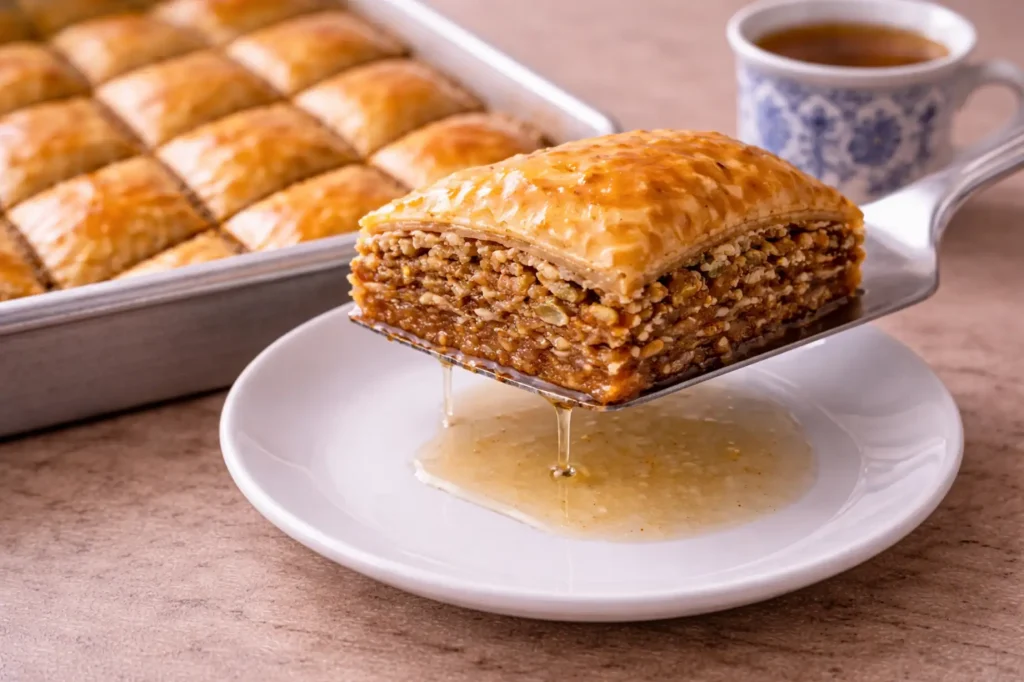
Baklava is served at room temperature, usually after coffee is poured. Pieces are lifted carefully and set on small plates. One piece is expected. Another might come later.
The first piece out of the tray is often the loosest. After that, they come out more cleanly.
Storage
Baklava keeps best at room temperature in a loosely covered tray or container. A tight lid traps moisture and softens the top.
It holds well for 3–4 days, often settling nicely by the second day.
Refrigeration is usually skipped. Cold air dulls the flavor and pulls moisture into the phyllo. If the kitchen runs very warm, the tray can be chilled briefly, then brought back to room temperature before serving.
Freezing is possible, though not common. If frozen, wrap tightly and thaw uncovered so condensation doesn’t soak in.
Reheating
Baklava doesn’t really need reheating. If the top has softened, a short stay in a low oven helps.
Place the tray uncovered in a 150°C / 300°F oven for a few minutes, then let it cool again.
Microwaves tend to collapse the layers and leave the center heavy.
Related Palestinian Desserts
- Ma’amoul (date or nut-filled cookies)
- Ka’ak Asawer (sesame rings)
- Ghraybeh (butter shortbread cookies)
- Basbousa / Namoura
- Awameh (fried dough balls in syrup)
Can Muslims eat baklava?
Yes, baklava is commonly eaten by Muslims, as it’s made with phyllo, nuts, butter or ghee, and sugar syrup.
How is Palestinian baklava usually served?
It’s served at room temperature, cut into small pieces, most often alongside Arabic coffee.
What is the national dessert of Palestine?
There isn’t one official national dessert, but baklava is one of the most commonly served sweets in Palestinian homes and gatherings.
What is Palestinian baklava?
Palestinian baklava is a home-style tray dessert made with layered phyllo, nuts, and a lightly scented sugar syrup poured on while it’s still hot.