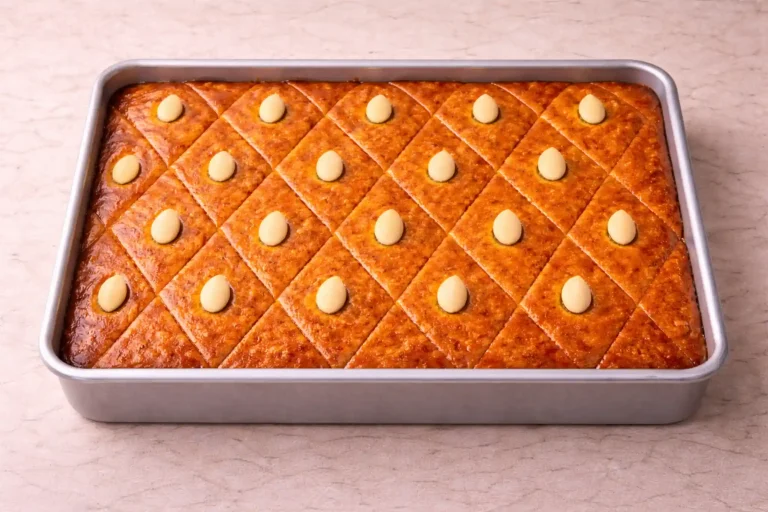
Knafeh Cheesecake Home-Made Style
Introduction

This is one of those desserts that looks more complicated than it feels once you’ve made it a few times. The knafeh does what it always does—turns crisp and buttery—while the cheesecake stays calm underneath. The key is pacing. Let each layer finish its job before moving on. When you do, it slices clean, holds together, and tastes like it belongs on the table.
Recipe At a Glance
- Prep Time: Active prep, mostly hands-on
- Bake Time: Slow and steady
- Chill Time: Essential, not optional
- Total Time: Spread across a day
- Yield: One full cheesecake
- Skill Level: Comfortable home cook
Ingredients

For the Knafeh Base
- Kataifi (kunafa) pastry – This forms the structure. When buttered and packed well, it bakes into a crisp layer that can actually carry the cheesecake without bending. Use plain, uncolored pastry.
- Unsalted butter or ghee – This is what browns the kataifi and gives it strength as well as flavor. Unsalted keeps the sweetness clean once syrup is added.
- Granulated or powdered sugar – A small amount helps the base caramelize. This is not for sweetness alone; it improves crunch and color.
For the Cheesecake Filling
- Full-fat cream cheese (block style) – This is the body of the cake. Blocks set properly; spreadable tubs stay soft and cause slumping.
- Granulated sugar – Sweetens and smooths the batter. It also affects how firmly the cheesecake sets once cooled.
- Eggs – These give structure. They are what turn the filling from cream into a sliceable cake.
- Heavy cream or sour cream – Adds softness and keeps the texture from baking up stiff or dry.
- Vanilla extract – Rounds out the dairy flavor. It shouldn’t be dominant.
- Orange blossom water (optional) – Used lightly. This echoes traditional knafeh flavor, but too much makes the cheesecake taste perfumed instead of balanced.
For the Sugar Syrup
- Granulated sugar – Provides sweetness and moisture. This is added after baking, not during.
- Water – Controls syrup thickness. Thinner syrup soaks gently; thick syrup weighs the pastry down.
- Lemon juice – Prevents crystallization and keeps the sweetness from tasting flat.
- Orange blossom or rose water (optional) – Traditional, but always restrained. The syrup should smell familiar, not floral-heavy.
For the Knafeh Topping
- Kataifi (kunafa) pastry – Separate from the base portion. This is toasted loose so it stays crisp on top.
- Unsalted butter or ghee – Coats each strand so it toasts evenly and stays crunchy longer.
For Finishing
- Pistachios, finely chopped – Added for contrast and a clean nutty finish.
- Extra sugar syrup – Served at the table, not poured heavily during assembly. This keeps the base from softening too soon.
Everything here has a job. Nothing is decorative, and nothing is accidental.
Quick Method Summary
- Prepare and cool the sugar syrup
- Butter and pack the kataifi to form the base
- Bake the knafeh base until deeply golden
- Mix the cheesecake filling until smooth
- Bake the cheesecake gently until just set
- Cool and chill the cheesecake fully
- Toast the kataifi for the topping
- Assemble, rest, and finish with syrup and pistachios
Step-by-Step Cooking Instructions
Prepare the Sugar Syrup
Combine the sugar and water in a small pot and bring it to a steady boil.
You’ll see the bubbles tighten and the liquid turn clear.
Lower the heat and let it simmer briefly, then remove from the stove.
The syrup should coat a spoon lightly, not drip thickly.
Set it aside to cool completely.
Warm syrup always sinks too fast and softens what it touches.
Prepare the Knafeh Base
Loosen the kataifi strands with your fingers and break them into shorter lengths.
They should separate easily without clumping.
Add the melted butter and sugar and rub everything together by hand.
The pastry should look evenly damp, not shiny or greasy.

Bake the Knafeh Base
Press the kataifi firmly into the bottom of the pan using the flat of a cup.
It should feel compact and level, with no spring when pressed.
Bake until the surface turns a deep, even gold.
Pale spots mean it will soften later.

Pour a light amount of cooled syrup over the hot base and let it absorb.
You’ll hear a quiet sizzle, then silence when it’s enough.
Set aside to cool fully.
Warm bases slide; cool ones hold.
Prepare the Cheesecake Filling
Beat the cream cheese until smooth before adding anything else.
The texture should look creamy, not broken or grainy.
Add the sugar and mix until the surface looks glossy.
If it still looks sandy, it needs another few seconds.
Add the eggs one at a time, mixing gently.
The batter should stay thick and calm, not airy.
Stir in the cream and flavorings just until combined.
Overworking shows up later as cracks.
Bake the Cheesecake
Pour the filling over the cooled knafeh base and level the top.
It should settle on its own without tapping.
Bake at a low, steady temperature.
The edges will puff slightly while the center still moves.

Turn off the oven and crack the door, leaving the cheesecake inside.
The surface relaxes instead of pulling away.
Cool and Chill
Remove the cheesecake once it feels just warm to the touch.
Running a knife around the edge should meet no resistance.
Chill until fully cold and firm.
A set cheesecake lifts cleanly and cuts without dragging.
Prepare the Knafeh Topping
Shred the remaining kataifi into loose strands.
Short pieces toast more evenly.
Cook it in butter over medium heat, stirring constantly.
The sound goes from soft to dry and crisp when it’s ready.

Set aside to cool completely.
Warm topping traps steam and loses crunch.
Assemble
Spread the topping evenly over the chilled cheesecake.
It should sit lightly, not sink.

Finish with pistachios and serve syrup on the side.
Each slice stays crisp, clean, and balanced.
Why This Dish Fails — and How to Prevent It
The base turns soft before serving
Bake the knafeh until it is deeply colored, not just lightly golden. Add syrup while the base is hot, then leave it alone until completely cool before layering anything on top.
The cheesecake cracks
Stop baking while the center still moves slightly. Let it cool slowly in the oven with the door cracked instead of moving it straight to the counter.
The cheesecake slides off the base
Pack the kataifi firmly and let it cool fully before adding the filling. A warm or loosely pressed base never holds its shape.
The topping loses its crunch
Toast the kataifi for the topping until dry and crisp, then cool it completely. Add it only after the cheesecake is fully chilled.
The cheesecake tastes heavy
Mix gently and stop as soon as the batter looks smooth. Overworking shows up later as density, not flavor.
The dessert tastes overly sweet
Keep syrup light during assembly and add more at the table. It’s easier to add sweetness than to take it back.
Serving

Serve knafeh cheesecake cool, not cold.
Take it out of the refrigerator about 20–30 minutes before slicing so the cheesecake relaxes and the flavors open up.
Cut with a long knife wiped clean between slices.
Spoon extra syrup at the table, not on the whole cake. This keeps the base crisp and lets each person decide how sweet they want it.
This is usually served on its own, sometimes with coffee or tea. Nothing else is needed.
Storage & Reheating
Storage
Store the cheesecake covered in the refrigerator for up to 3 days.
The flavor holds well, but the knafeh crunch slowly fades after the first day.
If possible, store leftover toasted knafeh topping separately and add it just before serving.
This keeps some texture where it matters most.
Freezing is not recommended once assembled.
The cheesecake survives, but the pastry does not.
Reheating
Reheating is optional and minimal.
If you want the base slightly warm, place a slice in a low oven for a few minutes only, just until the bottom loosens from the plate.
Let it rest briefly before eating.
The texture settles quickly when not rushed.
What Not to Do
Do not microwave slices.
The cheesecake softens unevenly and the knafeh turns chewy.
Do not pour syrup over the entire cake before storing.
It shortens the life of the crust.
Do not serve straight from the fridge.
Cold masks texture and makes the layers feel heavier than they are.
Can knafeh cheesecake be made ahead?
Yes, it’s best when chilled fully and served the same day it’s assembled.
Why does my knafeh base turn soft?
The base wasn’t baked deeply enough or was soaked with too much syrup too early.
Should knafeh cheesecake be served cold?
No, it’s best served cool, not straight from the fridge.
Can I reheat knafeh cheesecake?
Only gently in a low oven; microwaving ruins the texture.