Crisp Knafeh Cups – Home-Made Style
Introduction
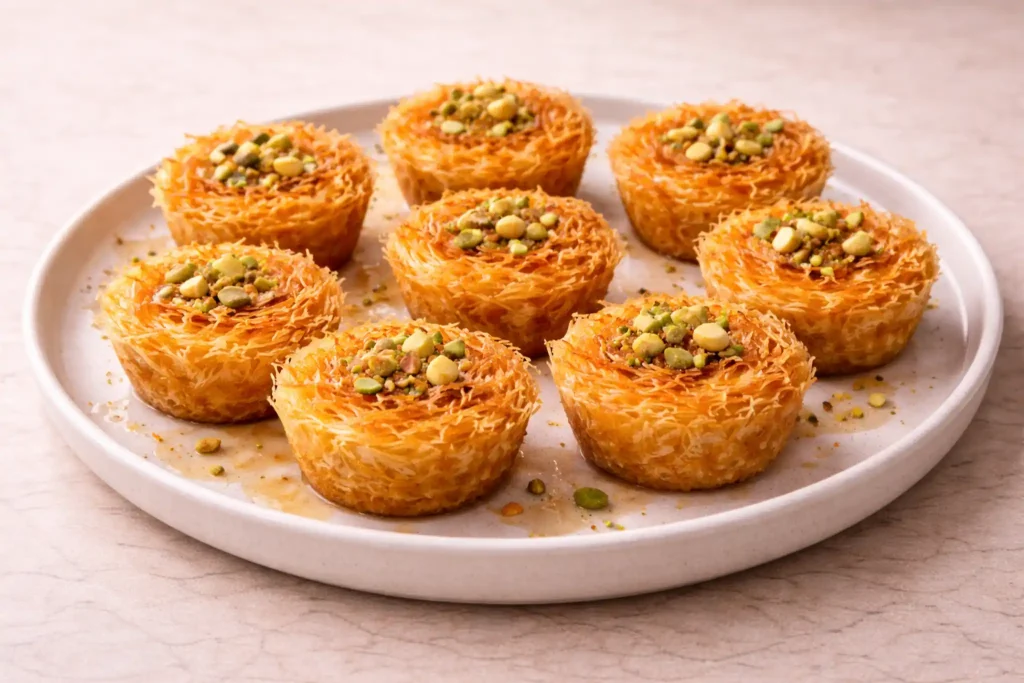
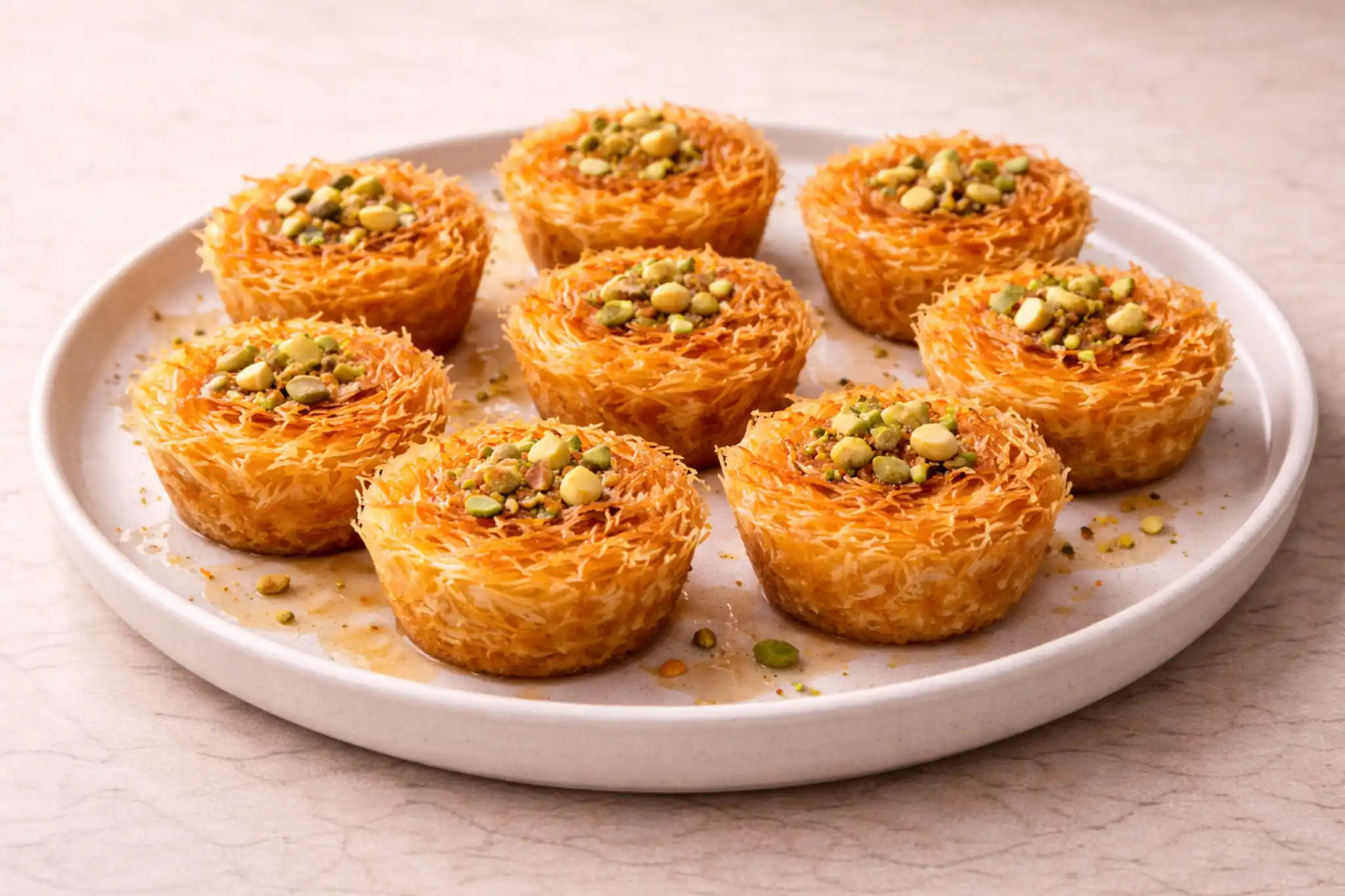
Knafeh cups are the kind of dessert you make when you want the comfort of knafeh without committing to a full tray. They’re familiar, a little messy the first time, and very forgiving once you’ve made them more than once. Crisp strands, gentle filling, syrup added at the end — the rhythm is the same every time, and it always settles into place.
Recipe At a Glance
- Dish: Knafeh Cups
- Style: Baked, individual portions
- Texture focus: Crisp outside, soft center
- Prep approach: Make-ahead components, assemble before serving
- Best served: Same day, shortly after filling
Ingredients
For the knafeh cups (crust)
- Shredded knafeh dough (kataifi / shredded phyllo) – Forms the structure of the cups and provides the crunch once baked.
- Unsalted butter – Coats the strands so they brown evenly and hold together; unsalted keeps sweetness under control.
- Neutral oil (optional, mixed with butter) – Helps prevent burning and keeps the crust crisp a little longer after baking.
For the filling
- Milk – Creates the base of the cream without heaviness.
- Heavy cream – Adds richness and softness so the filling sets gently, not stiff.
- Sugar – Sweetens lightly; the syrup does most of the work later.
- Cornstarch – Thickens the cream so it stays in place when spooned into the cups.
- Ricotta cheese – Adds body and a mild dairy flavor without stretch or pull.
- Orange blossom water – Gives the familiar knafeh aroma; a small amount is enough.
For the sugar syrup
- Sugar – Sweetens and gives the classic glossy finish.
- Water – Dissolves the sugar and controls thickness.
- Lemon juice – Keeps the syrup from crystallizing and balances sweetness.
- Orange blossom water or vanilla (optional) – Adds fragrance once the syrup is off the heat.
Optional garnish
- Crushed pistachios – Adds color and a light nutty contrast without extra sweetness.
Quick Method Summary
- Prepare and cool the sugar syrup
- Butter and separate the shredded knafeh dough
- Press the knafeh firmly into a greased muffin pan to form cups
- Bake until evenly golden and crisp
- Cook the cream filling and let it cool
- Spoon filling into the baked cups
- Drizzle syrup just before serving
Step-by-Step Cooking Instructions
Prepare the sugar syrup
Bring the sugar, water, and lemon juice to a boil, then lower the heat and let it simmer briefly. It should look clear and slightly thicker, not sticky or dark.
Make the cream filling
Whisk the milk, cream, sugar, and cornstarch over medium heat until it thickens. It should hold soft lines from the whisk and settle back smoothly without lumps.
Finish the filling
Take the pot off the heat and stir in the ricotta and orange blossom water. The mixture should feel warm and smooth, not loose or stiff.
Prepare the knafeh dough
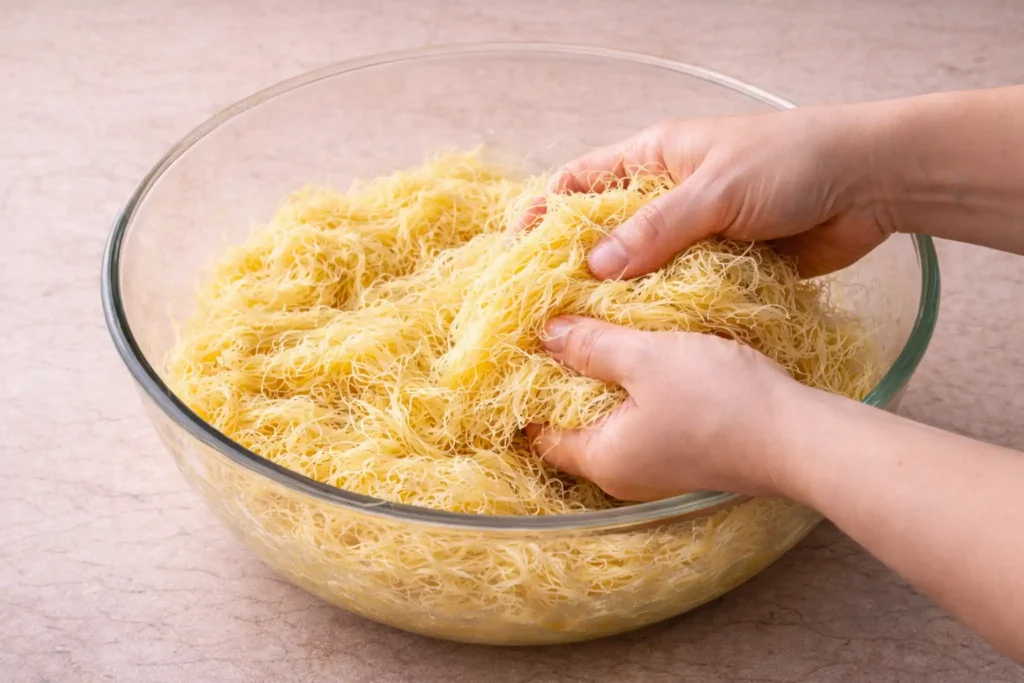
Pull apart the shredded dough and coat it evenly with melted butter. Every strand should glisten lightly without pooling butter at the bottom.
Shape the cups
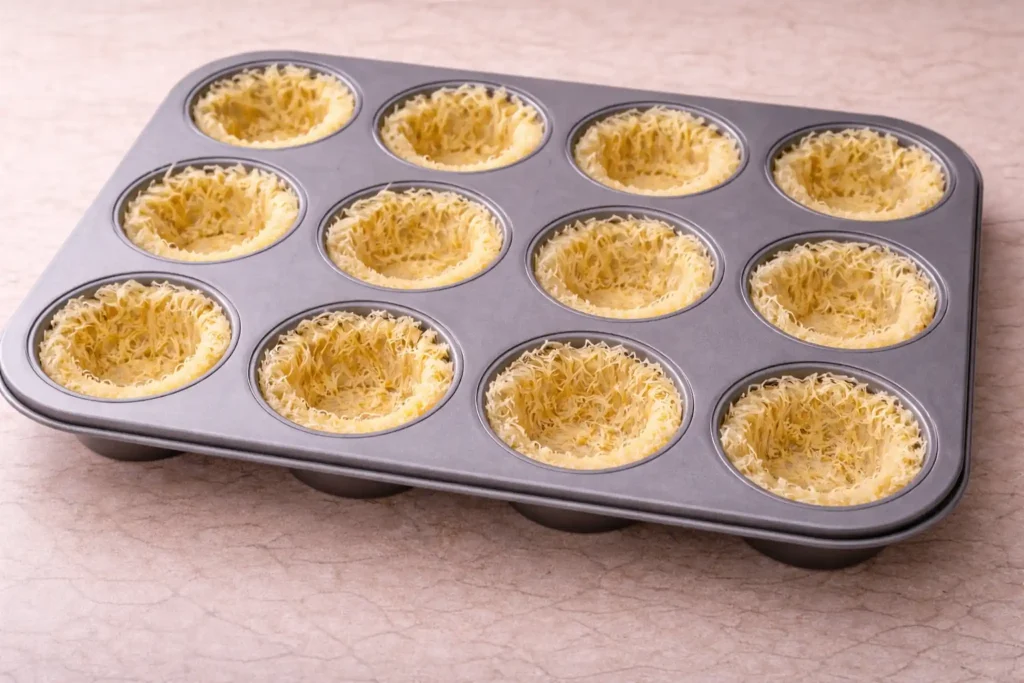
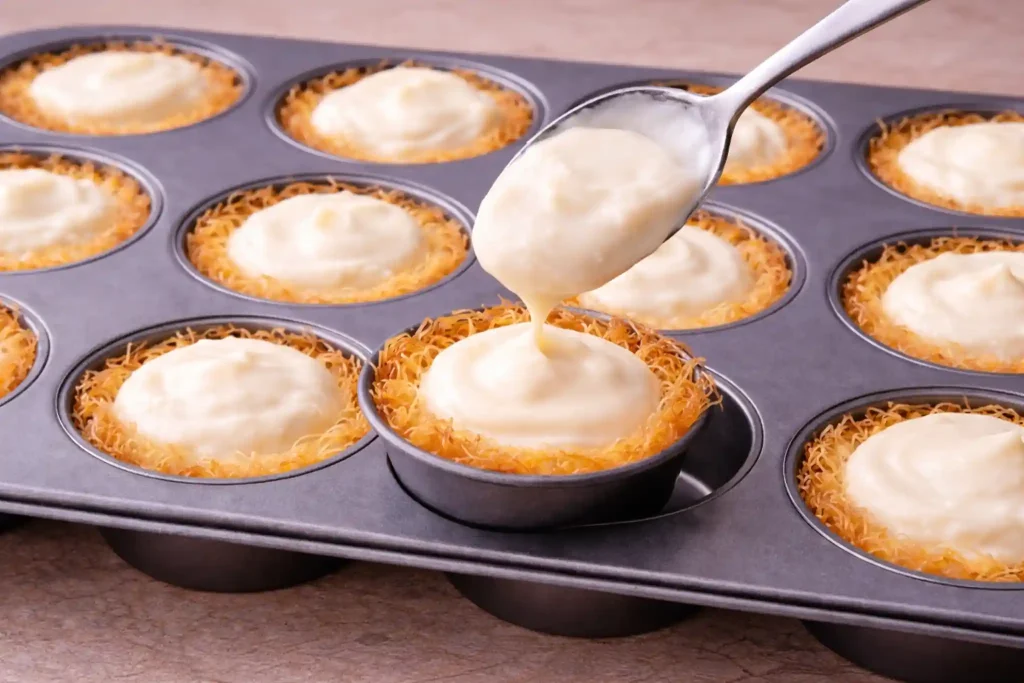
Press the knafeh firmly into a well-greased muffin pan, pushing up the sides and compacting the base. The strands should stay in place when you lift your fingers away.
Bake the cups
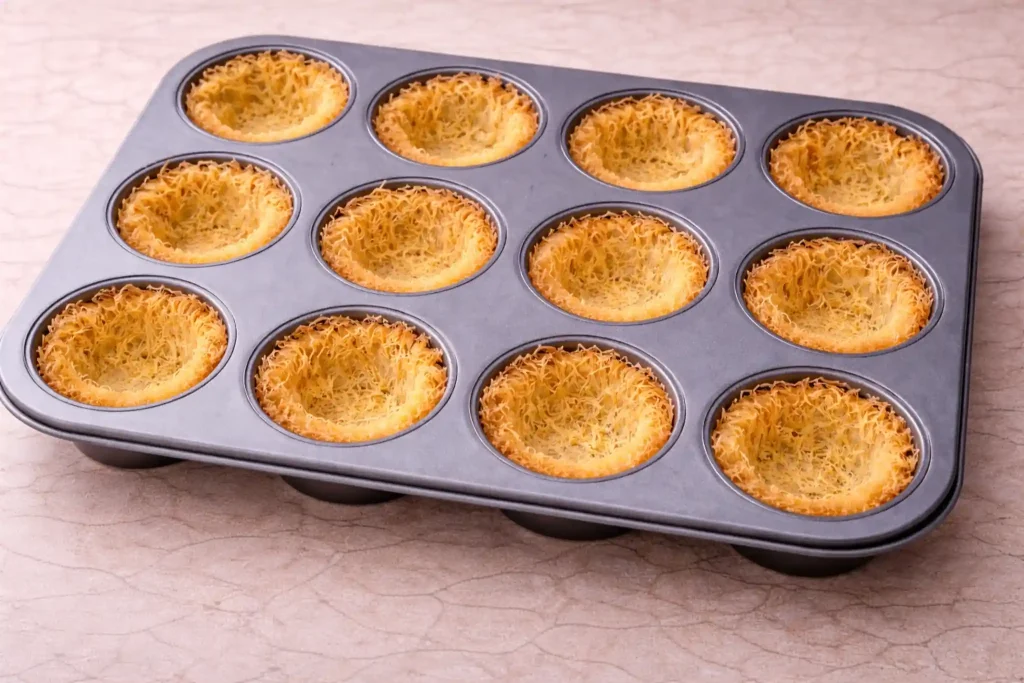
Bake until the cups turn evenly golden. The edges should feel crisp to the touch, not soft or pale.
Release the cups
Let the pan sit briefly, then gently loosen and lift each cup. They should come out cleanly without bending.
Fill and finish
Spoon the filling into the cups and drizzle with syrup just before serving. The cups should stay crisp while the filling settles inside.
Why This Dish Fails — and How to Prevent It
Cups turn soft too quickly
Bake the cups until fully golden and keep them unfilled until serving. Syrup and cream should never sit in the cups ahead of time.
Cups stick to the pan
Grease the sides of the muffin pan generously, not just the bottoms. Release the cups while they are warm, not cold.
Cups break when unmolding
Let the pan rest for a few minutes after baking, then loosen gently. Forcing them out too hot or too cold causes cracks.
Uneven browning
Mix the butter through the knafeh strands thoroughly and press each cup with similar pressure. Pale spots usually mean dry strands.
Filling leaks or sinks
Let the filling cool until thick but spoonable before using. Warm, loose filling finds gaps and softens the crust.
Overly sweet result
Use syrup lightly and add it at the end. The cups should taste crisp first, sweet second.
Serving
Serve the knafeh cups shortly after filling, while the cups are crisp and the filling has just settled. They’re usually finished with a light drizzle of syrup and a small sprinkle of pistachios, then brought to the table warm or just barely cooled.
Storage & Reheating
Storage
Store unfilled baked cups in an airtight container at room temperature for up to one day. The filling keeps well in the refrigerator for up to three days when covered. Once assembled, the cups are best eaten the same day.
Reheating
Reheat empty knafeh cups in a hot oven for a few minutes until crisp again. Warm the filling separately on low heat until just loosened, then assemble before serving.
What Not to Do
Do not refrigerate filled cups.
Do not microwave assembled knafeh cups.
Do not add syrup early and expect the cups to stay crisp.
Q1: Can knafeh cups be made ahead of time?
Yes, the cups and filling can be prepared separately and assembled just before serving.
Q2: Why do knafeh cups turn soggy?
They soften when syrup or filling sits in them too early.
Q3: How do you keep knafeh cups crisp?
Bake fully, store unfilled, and add syrup only at serving time.
Q4: Can knafeh cups be reheated?
Empty cups can be reheated in the oven; filled cups should not be reheated.