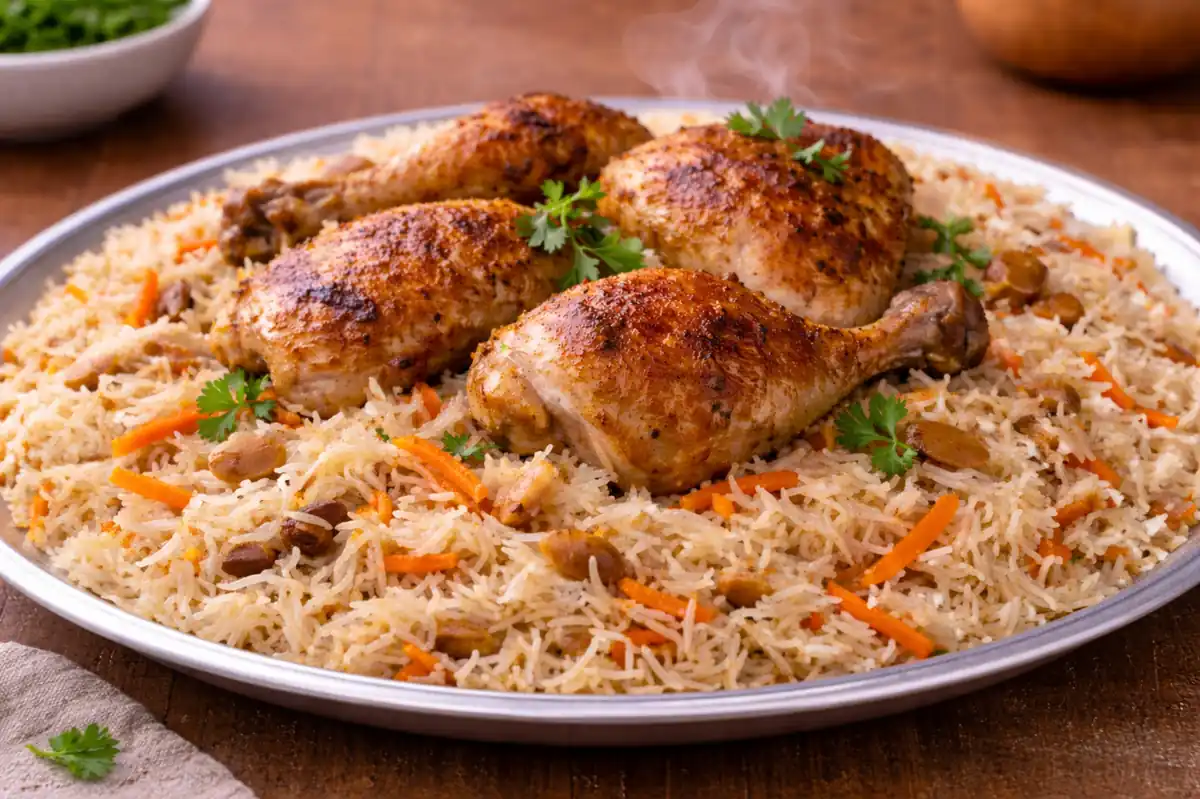
Bukhari Rice
A Hijazi home-kitchen Bukhari rice guide that teaches control—oil, heat, moisture, and timing—so the rice comes fluffy, balanced, and never greasy, even on a weak home stove.
This approach is written for home cooks who love restaurant-style Bukhari but repeatedly fail with mushy, oily, or dull rice when cooking it at home.
The focus throughout is practical control: how to handle fat, liquid, and heat so the rice succeeds every time.
Quick Method Summary
- Soak aged basmati rice, rinse until clear, then drain completely
- Fry carrots and raisins in oil, remove and reserve
- Brown onions, then sear chicken skin-side down until lightly golden
- Add tomatoes and tomato paste, cook until oil separates
- Stir in drained rice to coat grains evenly in the base
- Add measured liquid and whole green chilies, bring to a full boil
- Cover tightly, reduce to lowest heat, and steam until liquid is absorbed
- Rest covered off heat, then fluff gently and garnish
What Is Bukhari Rice?
Bukhari rice is a Saudi Hijazi rice dish defined by fluffy long grains, gentle sweetness from carrots, restrained spice, and controlled oil.
It is fragrant but not spiced-heavy, rich but never greasy.
The flavor profile depends more on technique than on seasoning.
What Bukhari Rice Is Not
Bukhari Rice vs Kabsa
Kabsa relies on heavier spice blends and deeper tomato intensity. Bukhari is lighter, sweeter, and cleaner in flavor.
Bukhari Rice vs Mandi
Mandi is steam-cooked with minimal oil and smoke influence. Bukhari uses oil intentionally and develops flavor through controlled sautéing.
Bukhari Rice vs Biryani
Biryani is layered, spiced, and aromatic with herbs and whole spices. Bukhari avoids layering, avoids masala blends, and focuses on grain integrity.
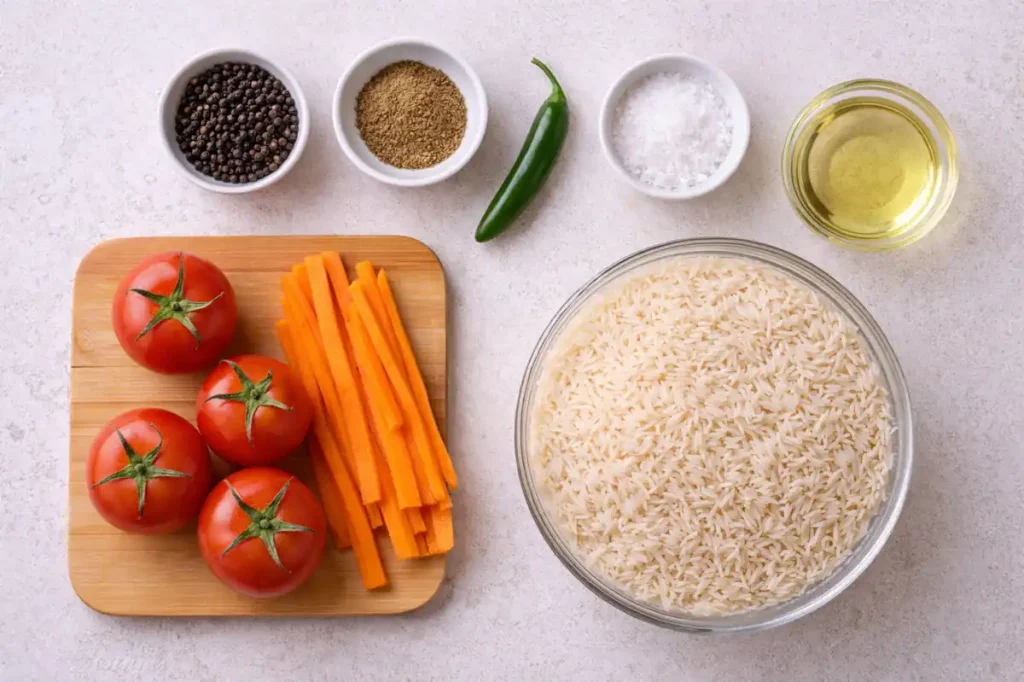
Ingredients (Authentic Bukhari Rice)
Basmati rice (long-grain, aged)
Used for its dry, separate grains and aroma; soaking 20–30 minutes relaxes the grain so it cooks evenly without splitting or turning mushy.
Whole chicken, skin-on (or bone-in pieces)
Provides depth and natural fat; the chicken is browned first so flavor enters the oil, not the rice later.
Neutral oil (traditionally vegetable oil)
Carries flavor and heat evenly; Bukhari relies on controlled oil—enough to coat grains, never enough to pool or fry the rice.
Onion (thinly sliced)
Forms the savory backbone; lightly caramelized onion balances tomato acidity and supports the mild spice profile.
Carrots (julienned or grated)
Essential sweetness source; carrots replace heavy spice complexity and give Bukhari its gentle sweetness and color without sugar.
Tomatoes (crushed or finely grated)
Provide mild acidity and color; used sparingly so the rice stays fragrant, not stewed.
Tomato paste (small amount)
Concentrates color and umami without adding excess moisture.
Green chili (whole, not chopped)
Adds background warmth, not heat; left whole to perfume the rice gently.
Salt
Seasoned in layers—oil base, chicken, and liquid—to prevent bland rice despite minimal spices.
Black pepper
Primary spice; gives warmth without masking the rice or carrot sweetness.
Ground cumin (optional, minimal)
Traditional but restrained; supports savoriness without turning the dish into kabsa or mandi.
Water or light chicken stock
Cooking medium; must be measured precisely to avoid mushy texture—stock should be mild, not aggressively seasoned.
Raisins (optional, traditional garnish)
Reinforce sweetness and contrast; added separately so they don’t bleed sugar into the rice.
Acceptable substitutions (without breaking authenticity)
- Sunflower or canola oil instead of vegetable oil
- Chicken stock instead of water (unsalted or lightly salted only)
- Brown basmati only if fully soaked longer and liquid adjusted
- No ghee, butter, cinnamon-heavy spice mixes, or biryani masala
Step-by-Step Cooking Instructions
Step 1: Wash the rice thoroughly
What to do: Rinse basmati rice under cold water, gently rubbing the grains, until the water runs clear.
Why it matters: Removes surface starch that causes clumping and mushiness during steaming.
Step 2: Soak the rice
What to do: Soak the washed rice in clean water for 20–30 minutes, then drain completely.
Why it matters: Hydrates the grain evenly so it elongates instead of bursting or turning soft on the outside and raw inside.
Step 3: Heat oil and fry carrots (and raisins, if using)
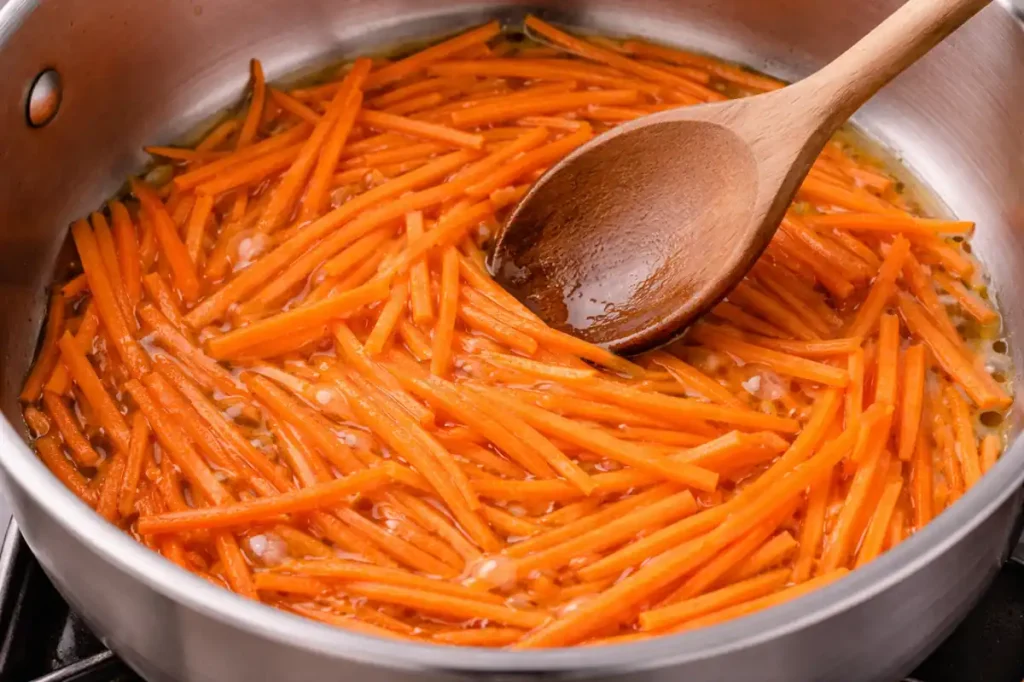
What to do: Heat oil over medium heat; fry carrots until slightly softened and glossy, then remove.
Why it matters: Sweetness is developed in the oil first; removing them prevents overcooking and sugar bleed into the rice.
Step 4: Brown onions gently
What to do: Add sliced onions to the same oil and cook until light golden, not dark.
Why it matters: Light caramelization builds flavor without bitterness or greasy heaviness.
Step 5: Sear the chicken
What to do: Add chicken skin-side down and sear briefly until lightly golden.
Why it matters: Renders controlled fat and transfers chicken flavor into the oil without flooding the pot with grease.
Step 6: Add tomatoes and tomato paste
What to do: Stir in tomatoes and tomato paste; cook until moisture reduces and oil separates.
Why it matters: Prevents watery rice and removes raw tomato acidity that dulls flavor.
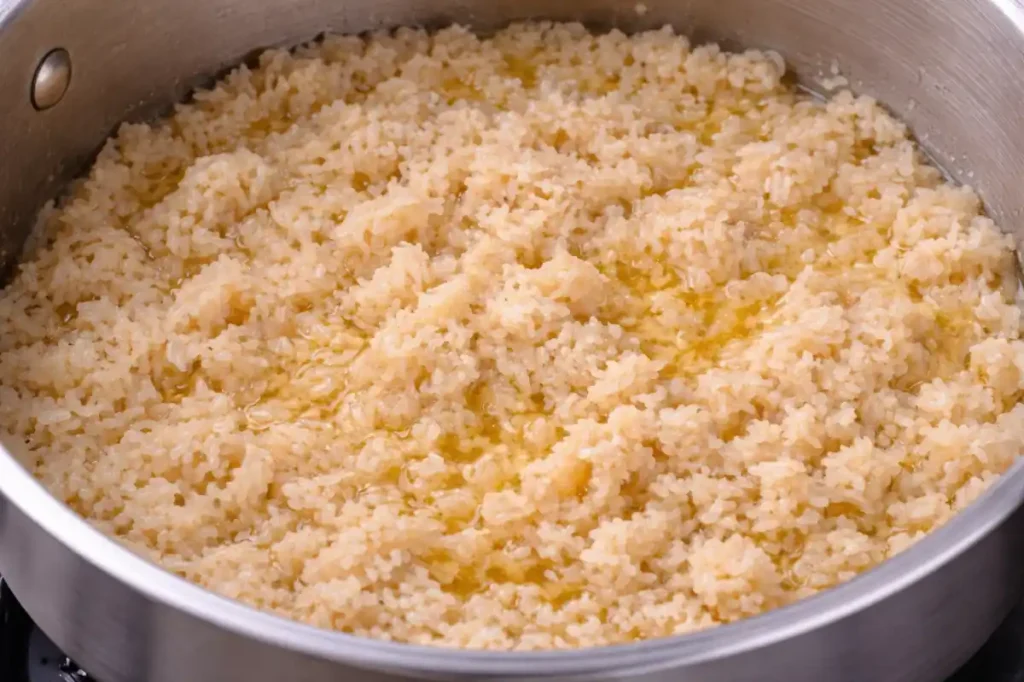
Step 7: Coat the rice in fat
What to do: Add drained rice and stir gently until every grain is glossy and coated.
Why it matters: Fat-sealed grains stay separate during steaming and resist mushiness.
Step 8: Add liquid precisely
What to do: Add measured hot water or light stock, plus whole green chilies and salt.
Why it matters: Excess liquid is the main cause of mushy rice; precision controls final texture.
Step 9: Boil, then immediately reduce heat
What to do: Bring to a full boil uncovered, then cover tightly and reduce to the lowest heat.
Why it matters: Boiling activates starch correctly; low heat finishes cooking by steam, not simmering.
Step 10: Steam undisturbed
What to do: Cook covered without stirring until liquid is fully absorbed.
Why it matters: Stirring breaks grains and releases starch, leading to stickiness.
Step 11: Rest off heat
What to do: Turn off heat and rest covered for 5–10 minutes.
Why it matters: Allows internal moisture to redistribute so rice finishes cooking evenly.
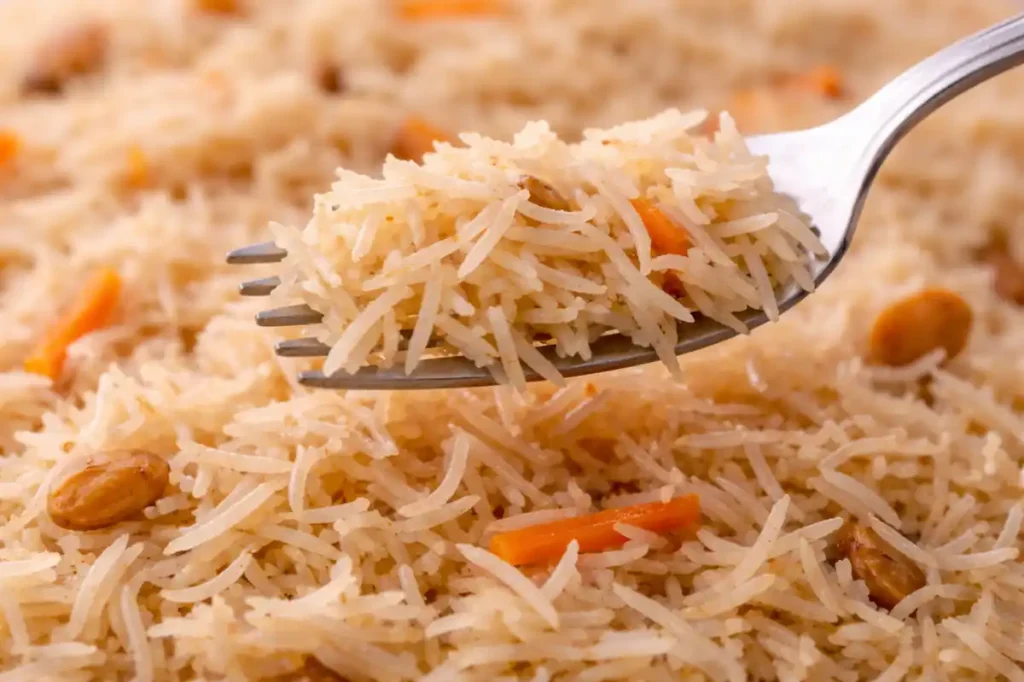
Step 12: Fluff and garnish
What to do: Fluff gently with a fork and top with reserved carrots and raisins.
Why it matters: Gentle separation preserves grain integrity and avoids crushing softened rice.
Why This Recipe Works
- Controlled oil technique prevents greasy rice
- Balanced tomato use avoids stewed texture
- Precise liquid ratios ensure fluffy grains
- Heat sequencing converts boiling to proper steaming
- Rice is coated, not fried, before cooking
Why Bukhari Rice Fails — and How This Recipe Prevents It
Mushy rice
Caused by excess liquid, poor washing, skipping the soak, or simmering instead of steaming. This method removes starch, limits water, and uses steam to finish.
Greasy texture
Caused by too much oil, late fat release, or adding butter or ghee. This recipe controls fat early and never floods the pot.
Over-spicing mistakes
Heavy masalas and whole spices overpower Bukhari. This recipe limits spices so carrot sweetness and rice aroma remain dominant.
Incorrect liquid ratios
“Cover the rice with water” leads to failure. This method measures liquid and evaporates excess before steaming.
Visual signs during cooking
Liquid should drop below the rice surface before covering. Finished rice should look dry on top with steam escaping, never wet or glossy.
Recipe Card: Bukhari Rice
Ingredients
(As listed above)
Instructions
(Follow step-by-step method above)
Yield & Timing
- Serves: 4
- Prep: 30 minutes
- Cook: 40 minutes
Notes
- Adjust liquid slightly depending on rice age and pot thickness
- Avoid stirring once steaming begins
Serving Suggestions
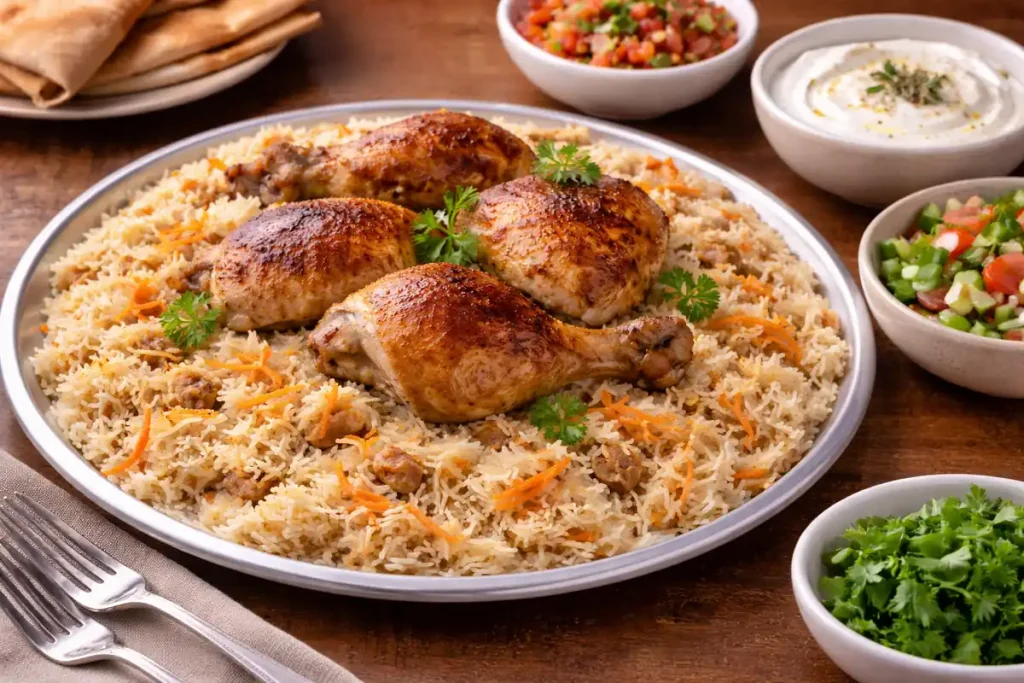
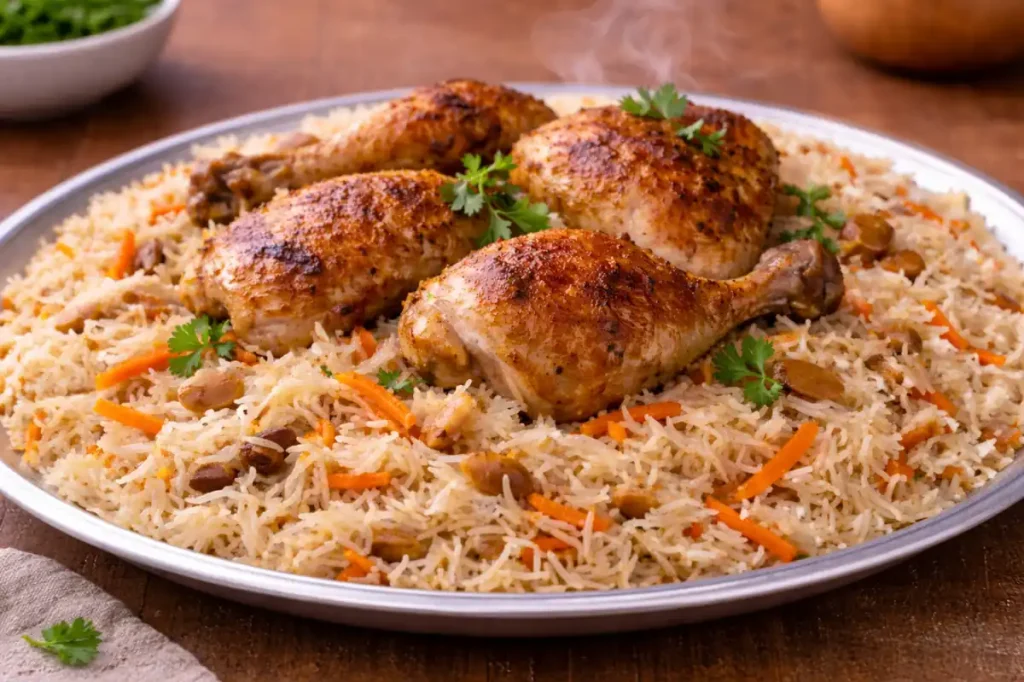
Serve warm on a wide platter.
Place chicken on top or alongside.
Serve with duggus and plain yogurt.
Keep sauces separate to preserve rice texture.
Storage & Reheating
Storage
Cool completely. Store airtight for up to 2 days. Store rice and chicken separately if possible.
Stovetop reheating
Warm gently with a few drops of water around the edges, covered tightly.
Oven reheating
Cover loosely with foil and reheat at low temperature.
Microwave
Last resort only; cover with a damp cloth and reheat without stirring.
Final Note
Bukhari rice rewards restraint and control.
When oil, liquid, and heat are handled correctly, the rice stays light, fragrant, and unmistakably Bukhari.
Why is soaking basmati rice necessary in this method?
Soaking hydrates the grain evenly so it elongates cleanly during steaming instead of splitting or turning mushy.
Why must the rice be coated in oil before adding liquid?
Oil coats each grain to slow water absorption, keeping the rice separate and preventing starch release.
Why do tomatoes need to cook until the oil separates?
This removes excess moisture and raw acidity so the rice cooks fragrant, not wet or bland.
Why does stirring after covering ruin the texture?
Stirring breaks softened grains and releases starch, which causes clumping and stickiness.
Why does excess liquid cause mushy rice in this recipe?
Too much liquid forces the rice to over-absorb water, breaking grains instead of finishing by steam.